EHS Insights
Blog Article
Ergonomics Technology: What to Ask Before You Buy
Ergonomics Technology: What to Ask Before You Buy
By Ed Havey
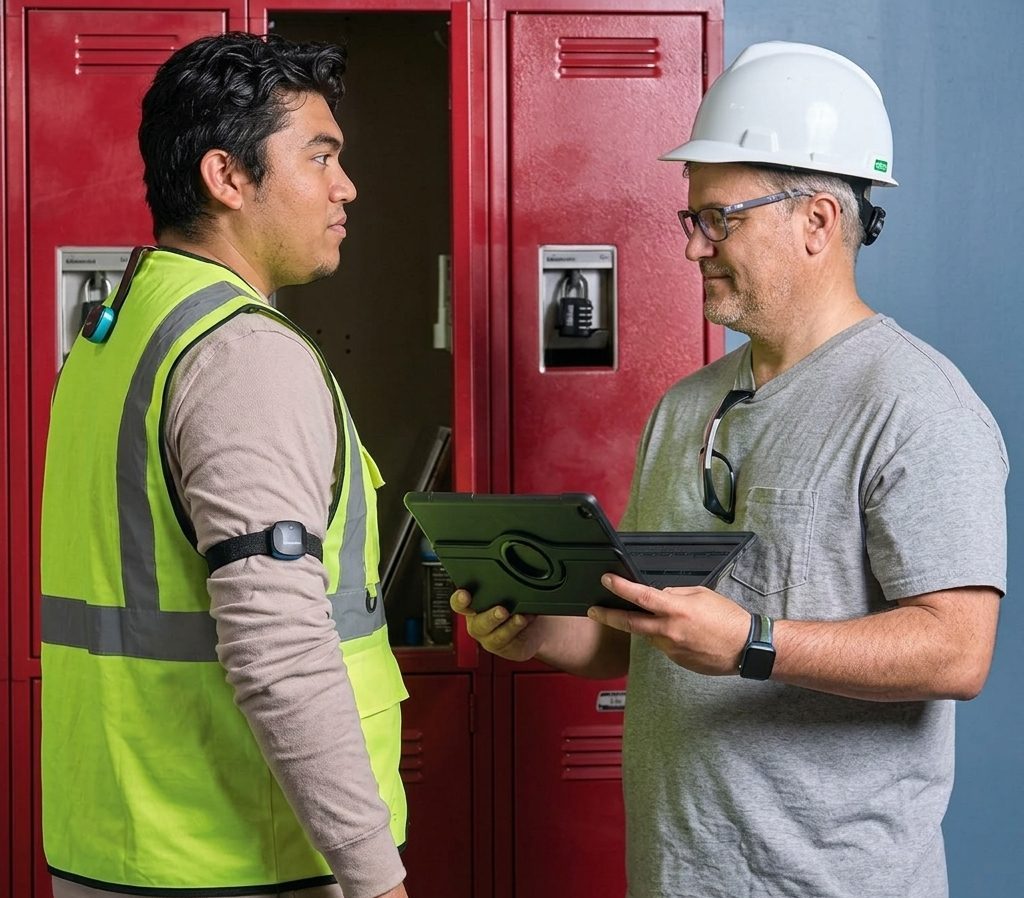
Computer vision/AI assessment tools, wearable sensors, and exoskeletons are all being pitched to safety teams right now, and the demos are polished and enticing.
The interest makes sense. Manual materials handling, hand- and shoulder-intensive tasks, and awkward postures together are the costliest cause of serious nonfatal workplace injuries in the U.S., at more than $17 billion a year in workers’ compensation costs. Any tool that promises to cut into those costs gets attention.
The challenging part is knowing which of these tools deliver once the sales demo is over and they land on a real shop floor, with real workers and real production pressure.
What These Tools Do
- Computer vision/AI tools assess injury risk from a smartphone video of a task.
- Wearable sensors monitor posture and movement and can give a worker feedback in real time. Some services also provide a risk assessment.
- Exoskeletons add physical support for certain tasks by reducing forces and exertions.
Each one addresses a different problem, so the right choice depends on yours.
Six Questions to Ask Before You Invest
1
What problem are we solving?
Start with your own injury and claims data. Know which jobs and body parts are driving injuries before you look at any product.
2
What does independent research say?
Ask for studies that were not funded or conducted by the vendor, and look for ones done in workplaces like yours. For exoskeletons, NIOSH has noted that more research is needed to understand how well they work across different industries.
3
Will it work on our jobs?
A tool that performs well on one task may do little for another. Test it on a single job before rolling it out.
4
How will employees react?
Video and wearable sensors raise trust and privacy concerns, so employees should be part of the evaluation process from the start.
5
What will it cost over time?
Licenses, training, maintenance, and the hours spent reviewing data all add up.
6
Who will act on the results?
Ergonomics assessment tools can flag risky tasks. Someone still has to fix them.
If You Are Not Ready for Technology
Many of the most effective steps cost very little. Talk to employees about the tasks that are physically difficult or leave them sore and tired at the end of the day. They are the experts in their jobs, and they likely have good ideas for making the work safer and easier.
Then review your injury and claims records for patterns in strains and sprains. Based on employee input and the data, you may find cost-effective ways to adjust work surface heights, reduce long reaches, and add lifting aids where loads are heavy.
These changes also give you a baseline. Technology is easier to evaluate when you already know where you started.
Free Live Webinar
Hear It From Our Ergonomist
Ed Havey, M.S., CPE, Senior Ergonomist at CMI, will cover these questions in a free live webinar, “Ergonomics Technology: Is It Right For Your Workplace?” on October 28, 2026 at 12:00 p.m. ET.
The session is vendor-neutral. It looks at what the research supports, where the evidence is still thin, and how to decide whether your organization is ready. It includes live Q&A, and a recording will be available afterward.
Is Ergonomics Technology Right for Your Workplace?
Join CMI on Wednesday, October 28, 2026 at 12:00 p.m. ET for a free, vendor-neutral look at what today’s tools can realistically deliver and how to evaluate them.