EHS Insights
Blog Article
Hearing Protection Is Personal: Why It Protects More Than Just Your Hearing
Hearing Protection Is Personal: Why It Protects More Than Just Your Hearing
By Ricardo Cardenas
Hearing protection is often viewed as another workplace safety requirement, but its importance extends far beyond OSHA compliance.
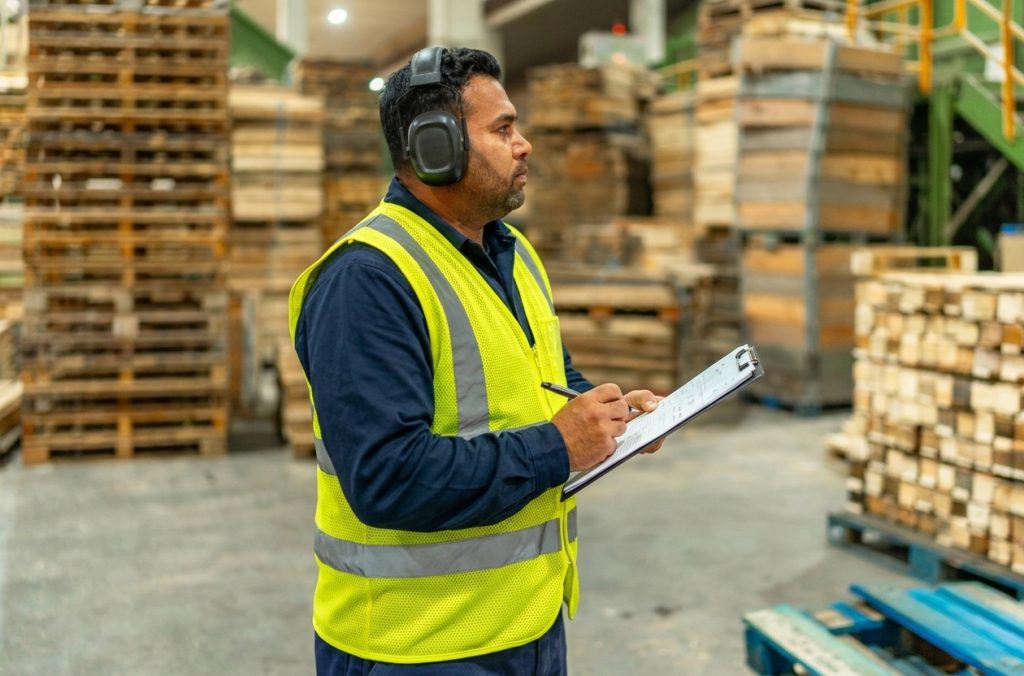
Employees are provided with earplugs or earmuffs, noise exposure levels are monitored, and hearing conservation programs are implemented to meet regulatory standards.
For me, hearing conservation is personal. Following a brain tumor, I experienced permanent hearing loss in my left ear. Today, I rely entirely on my right ear, making the protection of my remaining hearing one of my highest priorities.
That experience has given me a different perspective on something many of us take for granted: the ability to hear and understand the world around us.
At a Glance
- Noise-induced hearing loss is one of the most common occupational health concerns, yet it is largely preventable.
- OSHA’s action level is 85 dBA as an eight-hour TWA, and its PEL is 90 dBA. NIOSH recommends 85 dBA over eight hours.
- Decibels are logarithmic. Under NIOSH recommendations, allowable exposure time is cut in half for every 3 dB increase.
- Hearing protection works only when it is properly selected, fitted, and consistently worn.
- Reduce exposure first. Do not rely solely on PPE.
Understanding the Risks of Noise Exposure
Noise-induced hearing loss is one of the most common occupational health concerns, yet it is also largely preventable.
Exposure to excessive noise can damage the sensitive structures within the inner ear. Unlike many workplace injuries, hearing damage often develops gradually, making it difficult for employees to recognize until permanent changes have occurred.
OSHA’s General Industry standard, 29 CFR 1910.95, establishes an action level of 85 decibels (dBA) as an eight-hour time-weighted average (TWA). At or above this level, employers must implement a hearing conservation program.
OSHA’s permissible exposure limit (PEL) is 90 dBA over an eight-hour workday. However, the National Institute for Occupational Safety and Health (NIOSH) recommends an exposure limit of 85 dBA over eight hours.
| Measure | Level | What It Means |
|---|---|---|
| OSHA action level (29 CFR 1910.95) | 85 dBA, 8-hour TWA | At or above this level, employers must implement a hearing conservation program. |
| OSHA permissible exposure limit (PEL) | 90 dBA, 8-hour workday | OSHA’s permissible exposure limit for an eight-hour workday. |
| NIOSH recommended exposure limit | 85 dBA, 8 hours | NIOSH recommends a lower limit than OSHA’s PEL. |
Understanding these limits is important, but understanding how noise levels increase is equally critical.
Decibels: A Small Increase Can Make a Big Difference
One of the most misunderstood aspects of noise exposure is the decibel scale itself.
Unlike a traditional linear scale, decibels are measured logarithmically. This means a relatively small increase in decibels represents a significant increase in sound intensity.
For example:
+3 dB
An increase of 3 dB represents approximately twice the sound intensity.
+10 dB
An increase of 10 dB represents ten times the sound intensity.
95 vs. 85
A sound measuring 95 dBA has ten times the sound intensity of a sound measuring 85 dBA.
Under NIOSH recommendations, the allowable exposure duration decreases by half for every 3 dB increase in noise.
| Noise Level | Recommended Maximum Daily Exposure |
|---|---|
| 85 dBA | 8 hours |
| 88 dBA | 4 hours |
| 91 dBA | 2 hours |
| 94 dBA | 1 hour |
| 97 dBA | 30 minutes |
| 100 dBA | 15 minutes |
These recommendations illustrate how quickly the risk of hearing damage increases as noise levels rise.
Selecting and Using Hearing Protection
Hearing protection is only effective when it is properly selected, fitted, and consistently worn.
Common hearing protection options include:
- Disposable foam earplugs
- Reusable or moldable earplugs
- Over-the-ear earmuffs
Each type has advantages depending on the work environment and individual employee needs. In particularly high-noise environments, combining earplugs and earmuffs may be necessary.
Personally, I use moldable, semi-custom earplugs and carry earmuffs when working around heavy machinery. Having already lost hearing in one ear, I understand how important it is to protect the hearing I have remaining.
Proper fit is equally important. Earplugs that are not inserted correctly or earmuffs that do not seal properly may provide significantly less protection than expected.
NIOSH recommends individual hearing protector fit testing to help verify that employees receive adequate noise reduction from their selected protection.
Hearing Conservation Is More Than PPE
An effective hearing conservation program should focus on reducing exposure before relying solely on personal protective equipment.
Employers should evaluate noise hazards and implement feasible engineering or administrative controls whenever possible. Examples include:
Reduce Exposure
- Maintaining machinery to reduce unnecessary noise
- Installing sound barriers or acoustic enclosures
- Purchasing quieter equipment when practical
- Limiting the duration of employee exposure
Monitor, Test, and Train
- Conducting noise monitoring and required audiometric testing
- Providing employee training on hearing hazards and proper PPE use
Hearing conservation should also extend beyond the workplace. Concerts, sporting events, recreational equipment, and other loud environments can contribute to cumulative noise exposure.
The Impact of Hearing Loss Beyond the Workplace
Hearing loss affects more than our ability to detect sound.
Living With Hearing Loss in One Ear
- Identifying where sounds originate can be particularly difficult
- Conversations in noisy environments may require additional concentration
- Crowded spaces can become overwhelming
As a safety instructor, I experience these challenges when conducting training in rooms with varying levels of background noise. While I can often hear someone speaking, identifying where the voice is coming from is not always easy.
These challenges are a reminder that hearing conservation protects more than an employee’s ability to hear workplace instructions. It helps preserve communication, awareness, confidence, and quality of life.
In Summary
The Takeaway
Hearing protection is not just about preserving our ability to hear at work. It is about protecting the conversations, relationships, and everyday experiences that matter long after the workday ends.
Hearing conservation is not a box to check during a safety inspection. I cannot reverse the hearing loss I have experienced, but I can take steps to protect what remains.
Is Your Hearing Conservation Program Protecting Your People?
Hearing damage develops gradually and cannot be reversed. CMI’s health and safety specialists can help you evaluate noise hazards, review your hearing conservation program, and train employees on hearing hazards and proper PPE use.