EHS Perspective: What OSHA’s Top 10 Mean for Employers?
This list is more than a summary of enforcement activity, it serves as a valuable indicator of recurring compliance gaps and workplace hazards that continue to place employees at risk across industries.
For organizations, the Top 10 list offers an opportunity to proactively evaluate safety programs, prioritize risk, and strengthen compliance efforts before an inspection occurs.
What the Top 10 Citations Really Tell Us
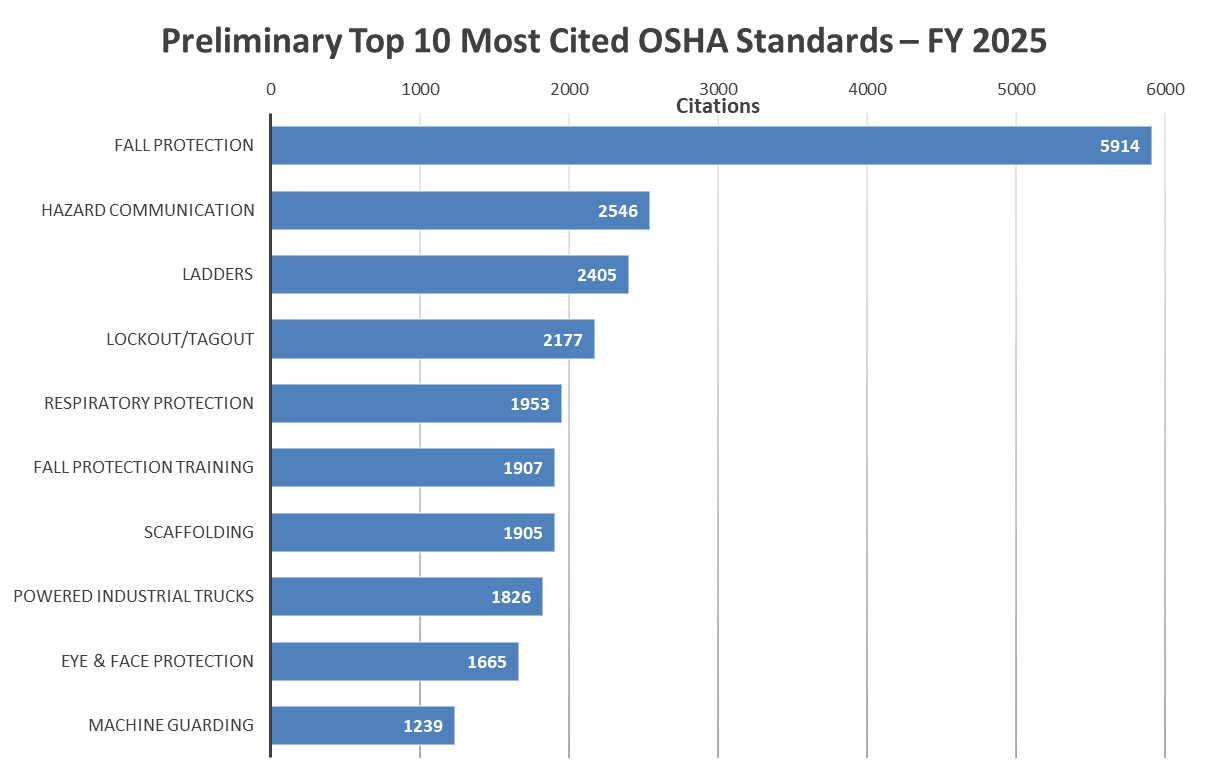
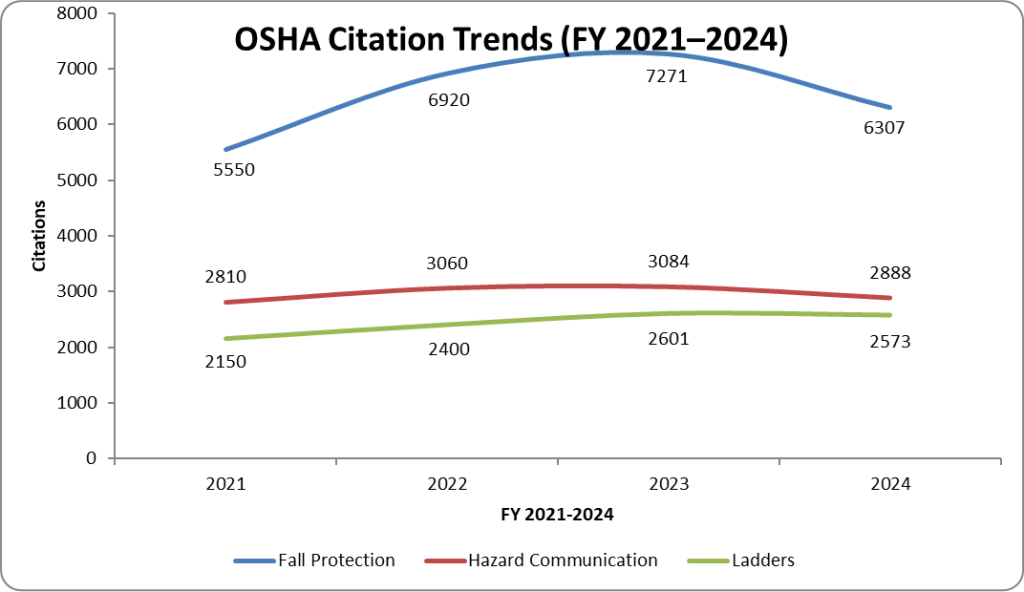
The same standards consistently appear on OSHA’s Top 10 list year after year. Fall protection, hazard communication, ladder safety, control of hazardous energy, and respiratory protection remain persistent challenges not because the requirements are unknown, but because safety programs are often underdeveloped, outdated, or inconsistently implemented.
These recurring citations indicate systemic issues rather than isolated oversights. Employers that address these trends strategically are better positioned to reduce injuries, avoid enforcement actions, and demonstrate a strong commitment to worker safety.
Using OSHA’s Top 10 as a Risk Management Tool
Organizations can use the Top 10 list as a roadmap for prioritizing safety efforts. By focusing on the most frequently cited standards, safety leaders can allocate resources where they will have the greatest impact.
Key questions to consider include:
- Are the established safety priorities current?
- Are hazard assessments current and task‑specific?
- Is the strategic safety plan right for the safety needs?
- Do written programs reflect actual work practices?
- Are employees trained and competent to recognize and control hazards?
- Are supervisors actively enforcing safety requirements?
Addressing these questions helps close the gap between regulatory requirements and real‑world application.
From Compliance to Prevention
Effective safety programs go beyond meeting minimum regulatory requirements. Organizations that experience sustained improvement focus on prevention, continuous evaluation, and accountability.
Targeting training, periodic self‑audits, and management involvement are critical elements of a successful compliance strategy. When safety performance is tracked, reviewed, and reinforced at all levels of the organization, compliance becomes embedded in daily operations rather than a reactive response to inspections.
How CMI Can Support Your Safety Goals
CMI partners with organizations to strengthen safety and environmental programs using a practical, risk‑based approach. Drawing on regulatory expertise and field experience, our CMI consultants help identify gaps, implement effective controls, and build sustainable compliance systems.
Our services include OSHA compliance audits, written program development, employee and supervisor training, hazard assessments, and mock inspections. By addressing the areas most frequently cited by OSHA, organizations can reduce risk exposure while improving overall safety performance.
Taking the Next Step
OSHA’s Top 10 Most Frequently Cited Standards provide a clear signal of where employers should focus their safety efforts. Leveraging this information proactively allows organizations to move from reactive compliance to strategic risk management.
Contact CMI to learn how your organization can use OSHA citation trends as the foundation for your next safety improvement initiative.