EHS Insights
Blog Article
PFAS Compliance in 2026: What EPA’s Latest Enforcement Shifts Mean for Your Facility
PFAS Compliance in 2026: What EPA's Latest Enforcement Shifts Mean for Your Facility
By Compliance Management International
Federal PFAS rules are slowing down while state requirements keep multiplying. Here is where PFAS compliance actually stands going into year-end planning, and what to do about it now.
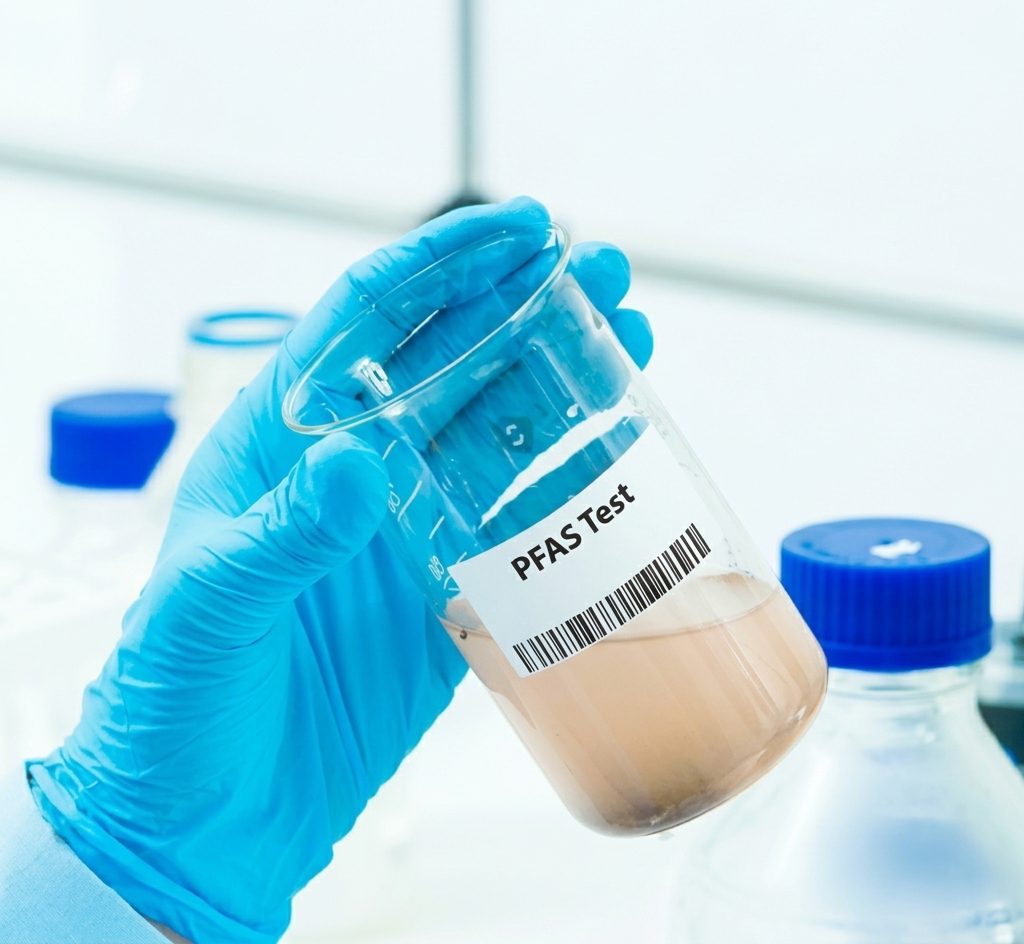
If your organization has been waiting for PFAS regulation to settle into something predictable, 2026 has not delivered that yet. Over the past several months, EPA has pushed back a major federal reporting deadline, proposed extending drinking water compliance timelines, and signaled it may narrow which PFAS chemicals get regulated at all.
Meanwhile, state legislatures have kept moving in the opposite direction, adding new product bans and reporting duties that took effect this year.
For EHS managers, the practical result is a PFAS compliance landscape shifting on two tracks at once. The federal program is slowing down and scaling back. The state-level patchwork is expanding.
The Dates That Drive PFAS Compliance Planning
Four figures shape most of the PFAS compliance work facilities need to scope for the rest of this year.
Jan 31, 2027
New start of the TSCA Section 8(a)(7) submission period, or 60 days after a forthcoming revised rule takes effect, whichever comes first.
2011 to 2022
The reporting lookback window. It has not changed through any of the delays, and reconstructing records this old takes time.
4 ppt
Enforceable drinking water limits for PFOA and PFOS. EPA has proposed keeping both while allowing systems to request more time.
Jan 1, 2026
Date a wave of state product bans and reporting duties took effect, including requirements in Maine, Colorado, Minnesota, and Washington.
Three Developments Reshaping PFAS Compliance Right Now
Each one moved this year, and each one pulls in a different direction.
1
TSCA Section 8(a)(7): The Reporting Deadline Has Moved Again
The TSCA Section 8(a)(7) rule requires any company that manufactured or imported PFAS, including PFAS contained in articles, at any point between January 1, 2011, and December 31, 2022, to report detailed data to EPA. That covers chemical identity, production volumes, uses, byproducts, exposures, and disposal practices. Because the original rule carries no minimum threshold, the obligation can reach further into a supply chain than many companies expect.
In April 2026, EPA finalized a rule pushing the start of the submission period from April 13, 2026, to January 31, 2027, or 60 days after a forthcoming revised rule takes effect, whichever comes first. EPA has not yet set a new closing date. The agency is also still reviewing thousands of public comments on a November 2025 proposal that could narrow the rule’s scope, including a possible concentration threshold of 0.1% or 1.0% that would exempt many downstream users entirely. Companies that manufactured, imported, or processed PFAS-containing materials during the lookback window should use this extension to:
- Confirm whether any products, components, or raw materials in your supply chain contain PFAS, including PFAS present in imported articles
- Pull together historical data now, since 2011 to 2022 records are hard to reconstruct on short notice
- Track EPA’s forthcoming final rule on scope, which determines whether smaller quantities or article importers are exempted
- Build a defensible internal PFAS inventory rather than scrambling once a firm deadline is published
The obligation has not gone away and the lookback period has not changed. Only the timing and the eventual scope are uncertain, and neither is a reason to wait.
2
Drinking Water Limits Are Likely Extending, Not Disappearing
EPA’s 2024 drinking water rule set enforceable Maximum Contaminant Levels for PFOA and PFOS at 4 parts per trillion, plus limits for PFHxS, PFNA, HFPO-DA (GenX), and a combined Hazard Index for mixtures of those three plus PFBS. Public water systems were given until 2027 to complete initial monitoring and until 2029 to reach full compliance.
Then, in May 2026, EPA proposed two changes. The first would keep the PFOA and PFOS limits in place while letting water systems request a two-year compliance extension, moving the deadline from April 2029 to April 2031. The second would rescind the individual limits for PFHxS, PFNA, and GenX chemicals and eliminate the Hazard Index mixture standard altogether, arguing those determinations did not follow proper Safe Drinking Water Act procedure. The comment period on both proposals closed in July 2026, and neither is final.
The 2027 initial monitoring deadline for PFOA and PFOS still stands. For industrial clients that discharge to POTWs or public water systems, a narrower federal list does not necessarily mean less exposure, because many states are positioned to keep their own limits for the same chemicals.
3
State PFAS Laws Are Not Waiting on Washington
While federal rules loosen and slip, state activity keeps accelerating. Several state requirements took effect on January 1, 2026, and more are already scheduled for 2027 and 2028 in New Mexico, New Jersey, and elsewhere. California’s AB 1817 textile restrictions also remain in force.
If your organization sells, distributes, or manufactures consumer products, packaging, textiles, or cookware nationally, no single federal standard will define your PFAS compliance picture this year. A product that is compliant in one state may not be sellable in another.
What Changed at the State Level in 2026
Requirements vary by product category, concentration threshold, and effective date. Several reach packaging and components rather than just the finished product.
Product Bans In Effect
- Maine now prohibits intentionally added PFAS in cleaning products, cookware, cosmetics, dental floss, juvenile products, menstrual products, ski wax, upholstered furniture, and most textiles
- Colorado prohibits sales of cleaning products, cookware, dental floss, menstrual products, ski wax, and PFAS-containing artificial turf
Reporting and Disclosure
- Minnesota’s Amara’s Law now extends reporting to PFAS in product components, including packaging integral to how a product is contained or dispensed
- Washington requires manufacturers to report intentional PFAS use in categories including footwear, hard-surface cleaners, and cookware under the Safer Products program
Already On the Calendar
- Connecticut and Vermont added product-category restrictions and disclosure obligations effective this year
- New Mexico, New Jersey, and other states have further changes scheduled for 2027 and 2028
- California’s AB 1817 textile PFAS restrictions remain in force
PFAS obligations are not disappearing. They are redistributing, from federal reporting and drinking water rules toward state product and packaging requirements.
What This Means for EHS Teams
The throughline across all three developments is the same. Federal reporting and drinking water rules are slowing down and may ultimately cover fewer chemicals, while state product and packaging requirements fill the gap and multiply.
As a result, facilities that treat this as a wait-and-see exercise carry real risk. A state deadline that is already locked in does not move because EPA has not finalized anything. A federal deadline, when it lands, may arrive with far less lead time than the current uncertainty suggests.
Ultimately, the slowest part of any PFAS response is historical recordkeeping. That work does not depend on a final federal rule, which makes it the sensible place to start while the rest of the picture settles.
Start Here
- Inventory where PFAS may exist in your materials, products, or supply chain, including the 2011 to 2022 lookback window
- Map which states you sell or distribute into, then confirm current product-category restrictions
- Assign someone to monitor EPA’s forthcoming final rules on both 8(a)(7) scope and drinking water limits
Do Not Wait For
- A fixed federal submission date before starting data collection
- Clarity on scope before building your internal PFAS inventory
- A final rule before checking state product requirements
In Summary
The Bottom Line
A delayed federal deadline is not the same as a lifted obligation. The TSCA lookback window, the state requirements already in effect, and the drinking water monitoring dates all stand regardless of what EPA finalizes next.
Facilities that use this window to build a defensible PFAS inventory and map their state footprint will be ready whenever the federal picture resolves. Those that wait will be doing the same work under a deadline instead.
PFAS Compliance Resources
Need Help Scoping Your PFAS Compliance Obligations?
If you would like help assessing where PFAS exposure or reporting obligations may apply to your operations, CMI’s EHS compliance team can walk through your specific facility, product lines, and state footprint.