EHS Insights
Blog Article
Respiratory Protection: A Respirator Only Works If It Fits
Respiratory Protection: A Respirator Only Works If It Fits
By Compliance Management International
A respiratory protection program can look complete on paper and still leave employees unprotected in the field. Respirators on hand, training done, fit-test records filed. None of it matters if the wrong respirator was selected or the employee cannot hold a seal.
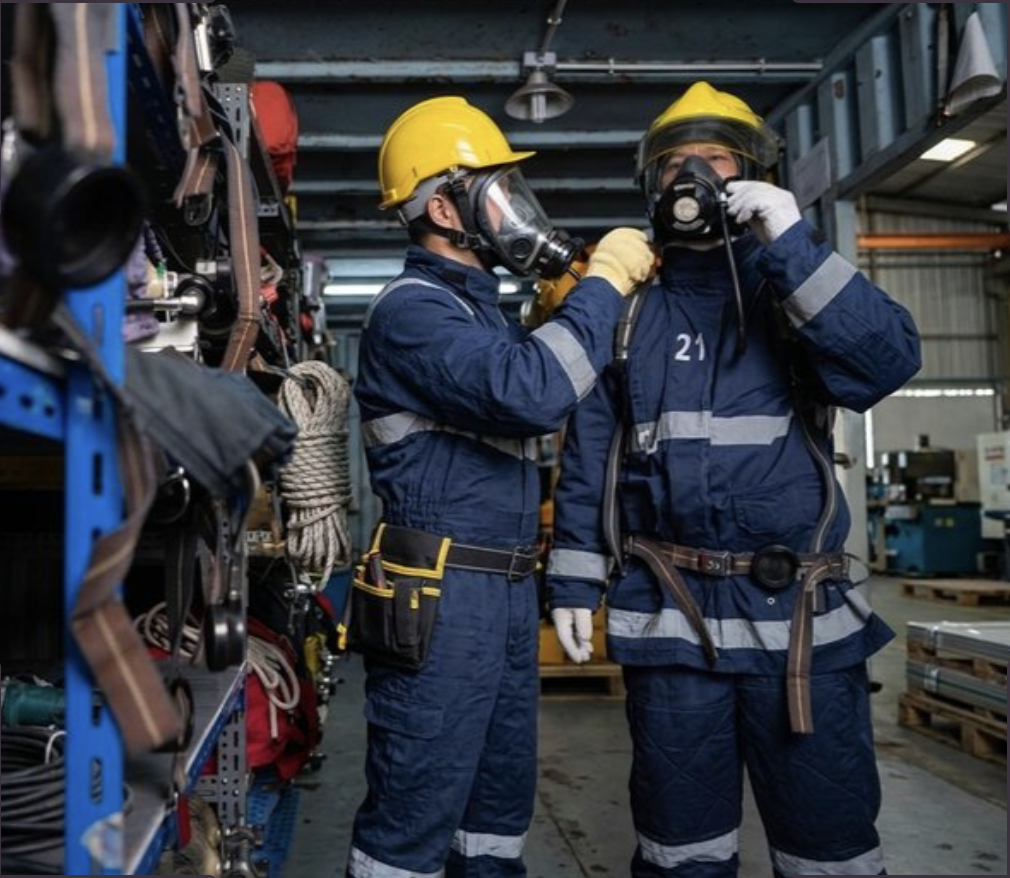
An employee walks into a dusty work area, grabs a respirator, puts it on, and gets to work. They are wearing respiratory protection, so they must be protected. Right?
Not necessarily. Respiratory protection is one of those safety programs that can look good on paper while still having significant gaps in the field. An employer may have respirators available, employees may have completed training, and fit-test records may be neatly filed away.
None of that matters if the wrong respirator is selected, the employee cannot get a proper seal, or the equipment is being used for a hazard it was never designed to protect against. An effective respiratory protection program starts long before an employee puts on a respirator.
Start With the Hazard, Not the Respirator
OSHA’s Respiratory Protection Standard, 29 CFR 1910.134, requires employers to protect employees from harmful airborne contaminants. The first step is determining what employees may actually be exposed to. Respiratory hazards include dusts, fumes, mists, gases, vapors, smoke, biological contaminants, and oxygen-deficient atmospheres.
Whenever possible, employers must first use feasible engineering controls such as ventilation, isolation, enclosure, or substitution to eliminate or reduce exposure. Respirators come into the picture when those controls are not feasible or do not bring exposure down far enough on their own.
At that point, OSHA requires considerably more than handing an employee a respirator.
The Numbers Behind a Compliant Program
Four figures come up in almost every respiratory protection review we perform.
19.5% Oxygen
Below this level, OSHA considers an atmosphere oxygen deficient. Filters and cartridges do not supply oxygen, so an air-purifying respirator cannot make it safe.
9 Elements
Selection, medical evaluation, fit testing, use procedures, maintenance, cartridge changes, training, program evaluation, and a qualified administrator.
Annually
Minimum fit-testing frequency for tight-fitting respirators, on top of initial testing before first use and retesting after a change in equipment or facial structure.
Every Shift
How often a user seal check is required. A passing fit test does not carry over to the next time the respirator goes on.
What a Respiratory Protection Program Requires, in Order
Where employees are required to wear respirators, the employer needs a written, worksite-specific program run by a qualified program administrator. Four stages sit at its center, and the order is not optional.
1
Medical Evaluation
Respirators place additional physical stress on the person wearing them. Before an employee is fit tested or required to use one, OSHA requires a medical evaluation to determine whether that employee can safely wear it.
Training does not answer this question and neither does a fit test. Medical clearance comes first, or everything after it rests on an assumption.
2
Fit Testing
Once medically cleared, an employee using a tight-fitting respirator must be fit tested on the same make, model, style, and size they will actually use at work. Testing is required before initial use and at least annually after that.
Additional fit testing is needed when an employee switches respirators or goes through a physical change that could affect the seal.
3
Training
Employees need to understand why the respirator is necessary, how to put it on and take it off, how to run a seal check, the limits of the equipment, and how it gets cleaned, inspected, and stored.
A successful fit test does not correct poor respirator selection, and training does not substitute for either one. Each element covers something the others do not.
4
Use, Maintenance, and Program Evaluation
The program has to cover procedures for proper use, cleaning, inspection, maintenance, and storage, along with cartridge and filter selection and replacement. It also has to be evaluated periodically to confirm it still matches the workplace.
Process changes, new chemicals, and new equipment all age a respiratory hazard assessment. Revisit it when the work changes, not only when the calendar says so.
Fit Test, Seal Check, and Voluntary Use Are Not the Same Thing
These three terms get used interchangeably in the field. They mean different things, and the difference tends to show up in citations.
Fit Test
- A formal test of whether one respirator fits one specific employee
- Required before initial use and at least annually
- Uses the same make, model, style, and size worn on the job
- Happens after medical clearance, never before
User Seal Check
- Done by the employee every time a tight-fitting respirator goes on
- Confirms the seal today, on this face, with this equipment
- Facial hair crossing the sealing surface is not allowed
- A fit test passed last spring does not replace it
Voluntary Use
- Employee chooses a respirator where exposures do not require one
- Employer still confirms the respirator itself creates no hazard
- Filtering facepieces such as N95s generally need Appendix D information
- Other respirator types can pull in further program elements
A respirator sitting on an employee’s face is not necessarily protecting them. The right respirator, properly selected, properly fitted, and properly used is what provides protection.
The Respirator Has to Match the Hazard
There is no universal respirator. An N95 is designed to filter certain airborne particles. It does not provide oxygen, and it does not protect against every gas or vapor. The same principle governs cartridge respirators, where cartridges and filters have to be selected for the specific contaminants present in that workplace.
Selection should account for the contaminant, the expected exposure, workplace conditions, the respirator’s Assigned Protection Factor, and the known limits of the equipment. Gas and vapor cartridges have a limited service life, so employers need cartridge change schedules where they are required. Waiting until an employee smells or tastes a contaminant is not a change schedule.
A written respiratory protection program, current medical evaluations, training records, and annual fit tests tell part of the story. The rest is what employees actually do once they are on the floor, and that only turns up when someone goes and watches.
Field Observation
Watch For
- Employees wearing a different respirator than the one they were fit tested on
- Seal checks skipped or rushed
- Facial hair interfering with the seal
- Cartridges that do not match the hazard
- Respirators stored loose in lockers or gang boxes
- Processes or chemicals that changed since the last hazard assessment
Non-Negotiables
- Medical clearance before any fit test
- A seal check every time the respirator goes on
- Cartridge change schedules set in advance, not by smell
In Summary
The Takeaway
Respiratory protection is not simply about putting something over your nose and mouth. An effective respiratory protection program starts by understanding the hazard and selecting the right protection for it.
Employees must be medically able to wear the respirator, properly fit tested, trained to use it, and able to maintain a reliable seal every time they put it on. Employers also need to look past the written program periodically and see how respiratory protection is actually being used in the workplace.
Respiratory Protection Resources
- OSHA Respiratory Protection Standard (29 CFR 1910.134)
- OSHA Appendix A: Fit Testing Procedures
- OSHA Appendix C: Respirator Medical Evaluation Questionnaire
- OSHA Appendix D: Voluntary Respirator Use
- OSHA Respiratory Protection Safety and Health Topics Page
- CMI Health & Safety Training and Compliance Services
Need Help With Your Respiratory Protection Program?
Compliance Management International helps organizations evaluate and strengthen their respiratory protection programs through program development and review, respiratory hazard assessments, respirator selection, employee training, fit testing, and workplace program evaluations. A program should do more than satisfy a compliance requirement. It should give employees the protection they expect every time they put on a respirator.