EHS Insights
Blog Article
Forklift Compliance: Certification and Safety Rules
Is Your Forklift Program OSHA Compliant? Certification, Inspections, and Safety
By Peter Schlenker
A delivery truck backs into your dock and someone climbs on the forklift to unload it. That happens thousands of times a day across the country. However, two questions decide how it goes: are you compliant with the OSHA regulations, and is the task actually being performed safely?
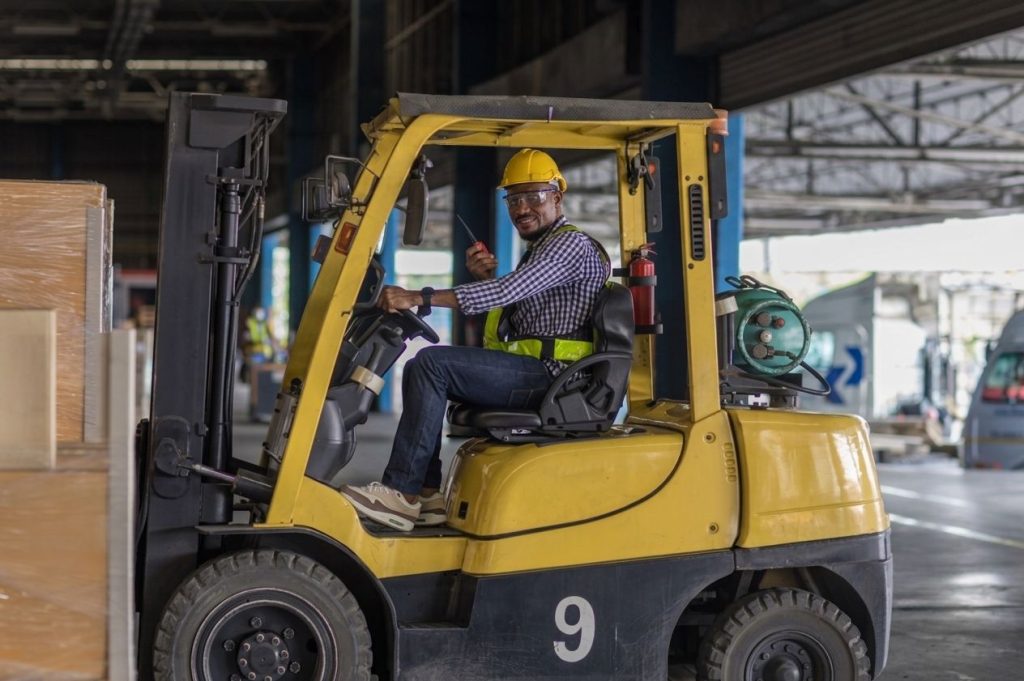
A delivery truck pulls up to your loading dock with several pallets of materials. What do you do next? For instance, most facilities send the receiving department out with a forklift to unload it. This is one of the most routine tasks in any warehouse, plant, or yard. Because of this routine nature, it is easy to stop questioning how it gets done.
Powered industrial trucks are also one of OSHA’s most frequently cited standards year after year. The two questions worth asking before the next truck arrives are simple: are we compliant with the OSHA regulations, and are we performing this task safely? They are not the same question, and a facility can pass one while failing the other.
What OSHA Requires Under 29 CFR 1910.178
First, start with the regulations. OSHA standard 29 CFR 1910.178 covers powered industrial trucks. It sets clear expectations for who may operate a truck and how they get approved.
Specifically, the standard requires that:
- All forklift operators are at least 18 years old
- All operators are properly trained and certified before operating a truck
- Training includes classroom instruction, hands-on training under the direct supervision of a certified forklift operator, and an evaluation of the operator’s skills
- Certification is good for three years, after which the operator must be re-evaluated in order to be recertified
- Any modification to the forklift that could affect capacity is approved in writing by the manufacturer, and the manufacturer’s nameplate is updated to reflect the change
That last point gets missed often. For example, adding an attachment, a longer fork, or a cage changes how the truck handles loads. If the nameplate still shows the original capacity, the operator works from outdated information.
The Numbers That Define a Compliant Program
Three figures from 1910.178 drive most forklift compliance findings. If you only audit one thing this quarter, audit these.
18 Years Old
The minimum age to operate a powered industrial truck. No exceptions for supervised or occasional use.
3 Years
How long a certification stays valid. After that, the operator must be re-evaluated before being recertified.
7 Classes
Operators must be trained, evaluated, and certified for every class of truck they are assigned to run.
How to Certify a Forklift Operator
Certification is not a single class or a signed form. OSHA expects four distinct pieces, and skipping any one of them leaves the certification open to challenge.
1
Classroom Instruction
Formal training covering truck-specific operating instructions, capacity and stability, load handling, refueling or battery charging, and the workplace conditions the operator will actually face.
Keep a roster, the course outline, and the date on file for every session.
2
Hands-On Training
Practical training on the actual truck, in the actual work area, under the direct supervision of a certified forklift operator.
Direct supervision means present and watching, not nearby and available.
3
Skills Evaluation
A documented evaluation of the operator’s performance on the equipment they will run, confirming they can do the job safely before working on their own.
Evaluate on each class of truck the operator is assigned to, not just one.
4
Re-Evaluation Every Three Years
Certification expires after three years and the operator must be re-evaluated in order to be recertified. Refresher training is also required sooner if the operator is involved in an accident or near miss, is observed operating unsafely, is assigned a different type of truck, or workplace conditions change.
Track expiration dates by operator so recertification is not discovered during an audit.
The 7 Forklift Classifications
There are seven different forklift classifications, and an operator must be trained, evaluated, and certified for each class they use. A certification on a sit-down electric rider does not carry over to a rough terrain truck.
I
Electric Motor Rider Trucks
Battery powered sit-down and stand-up riders, common in indoor warehousing and manufacturing where emissions are a concern.
II
Electric Motor Narrow Aisle Trucks
Reach trucks, order pickers, and turret trucks built for tight racking and high-density storage.
III
Electric Motor Hand Trucks or Hand/Rider Trucks
Walkie pallet jacks and walkie stackers. These are still powered industrial trucks, and they still require training and certification.
IV
Internal Combustion Engine Trucks, Solid or Cushion Tires
Indoor use on smooth surfaces such as finished concrete, where a cushion tire gives a tighter turning radius.
V
Internal Combustion Engine Trucks, Pneumatic Tires
Yards, lumber operations, and outdoor surfaces where the truck needs traction and ground clearance.
VI
Electric and Internal Combustion Engine Tractors
Tow tractors and tuggers used to pull loads rather than lift them, common in assembly plants and airports.
VII
Rough Terrain Forklift Trucks
Vertical mast and variable reach trucks used on construction sites and uneven ground, where load charts and stability change with boom position.
Compliant on Paper Is Not the Same as Operating Safely
Certifications in a binder tell you that training happened. However, they do not show what the operator does at 2:00 PM on a Friday when a truck is late. To determine whether the task is safe, you must observe operators performing actual duties in their real work areas.
There are many different areas of concern to look for during an observation, including blind corners, loading docks, ramps and inclines, and hazardous or classified areas. Watch how the operator approaches each one, how they position the load, and whether they slow down and sound the horn where visibility drops.
In addition, two basic habits account for a large share of field violations. First, operators must complete the pre-shift inspection of the forklift. Second, the operator must wear the seatbelt if the truck has one. Both items are quick to verify, but operators frequently skip them once tasks become routine. Ultimately, a certified operator and a safe operator are not automatically the same person.
Observation Checklist
Areas of Concern
- Blind corners and intersections
- Loading docks and trailer entry
- Ramps and inclines
- Hazardous or classified areas
- Pedestrian traffic and aisles
Non-Negotiables
- Pre-shift inspection completed and documented
- Seatbelt worn where the truck is equipped
- Damaged or defective trucks removed from service
Forklift Compliance Questions We Get Most Often
Tap any question to expand the answer.
How often does forklift certification need to be renewed?
Every three years. You must re-evaluate the operator at that point to recertify them. However, refresher training is required sooner if an accident or near miss occurs. You must also re-train if an operator drives unsafely, switches truck types, or encounters workplace changes.
What is the minimum age to operate a forklift?
OSHA requires all forklift operators to be at least 18 years old. There is no allowance for younger workers operating a powered industrial truck under supervision.
Do operators need separate training for each type of forklift?
Yes. There are seven forklift classifications, and an operator must be trained, evaluated, and certified for each class they use. Moving an operator from a cushion tire sit-down truck to a reach truck or a rough terrain truck requires training and evaluation on that equipment.
What does OSHA-compliant forklift training include?
Three parts: classroom instruction, hands-on training under the direct supervision of a certified forklift operator, and a documented evaluation of the operator’s skills. Online-only training does not satisfy the standard on its own because it cannot cover the hands-on and evaluation components.
Is a pre-shift forklift inspection required?
Yes. Operators must examine trucks before placing them in service. Furthermore, you must remove any unsafe truck from service until it is repaired. If you run equipment around the clock, inspect it after each shift.
Can we modify a forklift or add an attachment?
Only with written approval from the manufacturer when the modification affects capacity or safe operation. Additionally, you must update the manufacturer’s nameplate to reflect the change.
Who can train and evaluate our forklift operators?
A qualified person with the knowledge, training, and experience to train operators and evaluate their competence must conduct the course. This can be an internal employee who completed train-the-trainer instruction, or an outside EHS partner.
Need Help With Forklift Training or Evaluations?
Compliance Management International offers forklift classroom training and operator evaluations, forklift train-the-trainer sessions, and site safety inspections. If you need help getting operators certified, recertified, or observed in your own work areas, our team can help.